
Walk into almost any classroom and you’ll find all different types of learners.
Some students are eager to jump into new challenges. Others prefer to observe before participating. Some thrive in hands-on activities, while others need more time and different forms of support to stay engaged.
For educators, this is one of the biggest challenges in modern education: how do we create learning experiences that engage every student?
Increasingly, research points toward an approach that educators have long recognized as powerful: learning through inquiry and play.
When Technology Encourages Collaboration and Movement
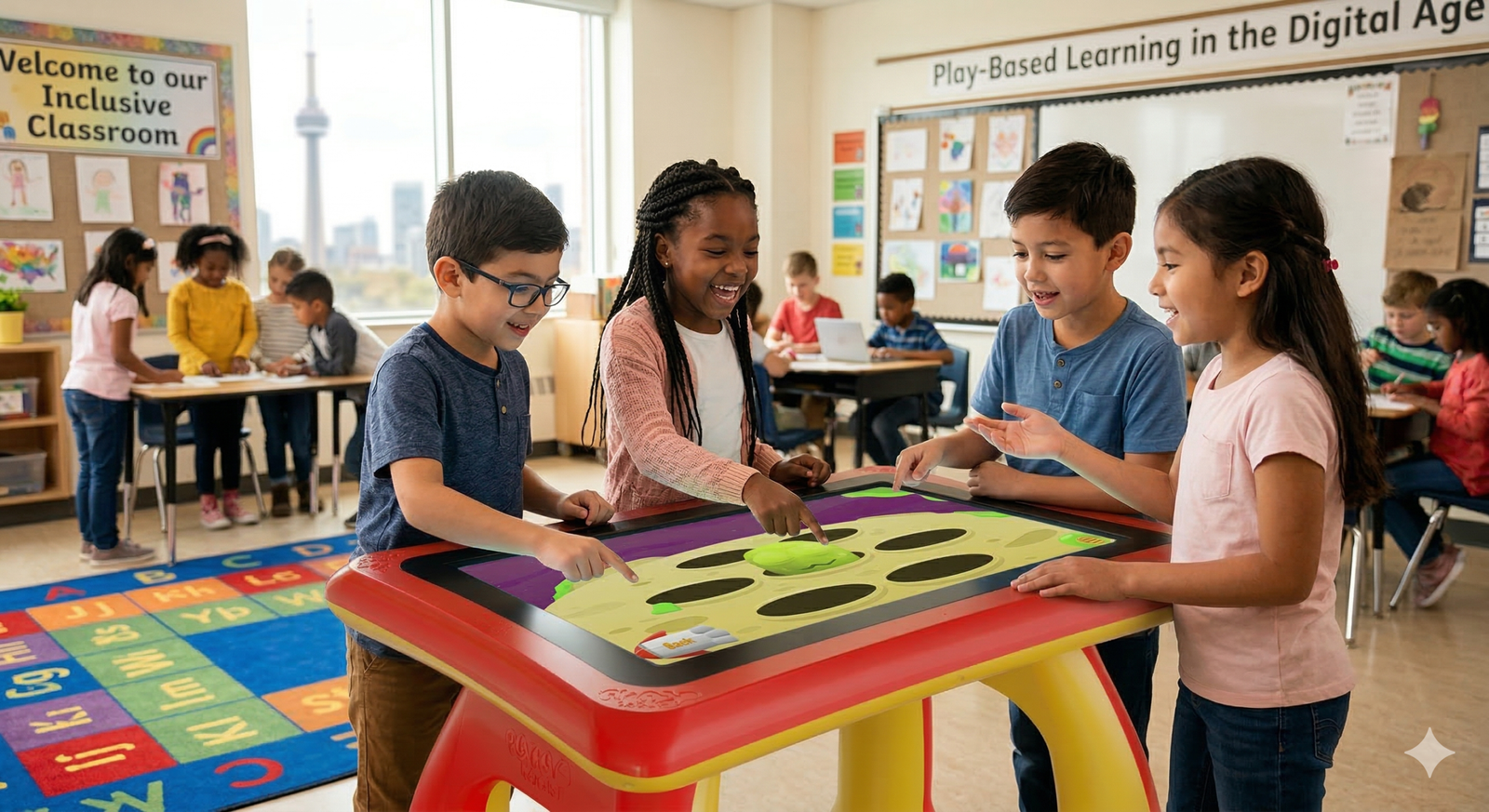
That idea is what inspired the creation of the interactive learning platform behind the Playmove Table. This learning tool was originally developed in Brazil, where it has been used successfully by educators in thousands of classrooms over the last decade. The Playmove Table combines interactive educational games with a large touch-based digital table designed for group learning.
Instead of isolating students behind individual devices, the platform invites them to gather around a shared interactive surface, where they can explore challenges and learn together.
Students move. They discuss ideas. They test strategies and try again.
In other words, they learn actively.
Supporting Inclusive Learning
Interactive, play-based learning environments can be particularly helpful for diverse learners.
Students with ADHD, autism, dyslexia, and other exceptionalities often respond well to environments that include movement, visual interaction, and collaborative problem-solving.
By allowing multiple students to interact simultaneously and approach tasks in different ways, the Playmove Table helps create more inclusive learning experiences and ensures participants is not limited to a single pace of format
By offering multiple ways to engage, playful learning tools help educators reach students who may not thrive in more traditional instructional formats.
A New Kind of Classroom Experience
Across schools around the world, educators are looking for ways to make learning more meaningful and inclusive for every student in a world that is increasingly focused on technological advancements.
By combining research in playful learning with interactive technology, tools like the Playmove Table help educators create spaces where every student can participate and feel excited about learning, while developing real-world skills like collaboration, communication, and problem-solving that will serve them throughout their lives.
Because when students are actively involved in the learning process, education becomes more engaging, allowing students to explore, experiment, and discover together.