
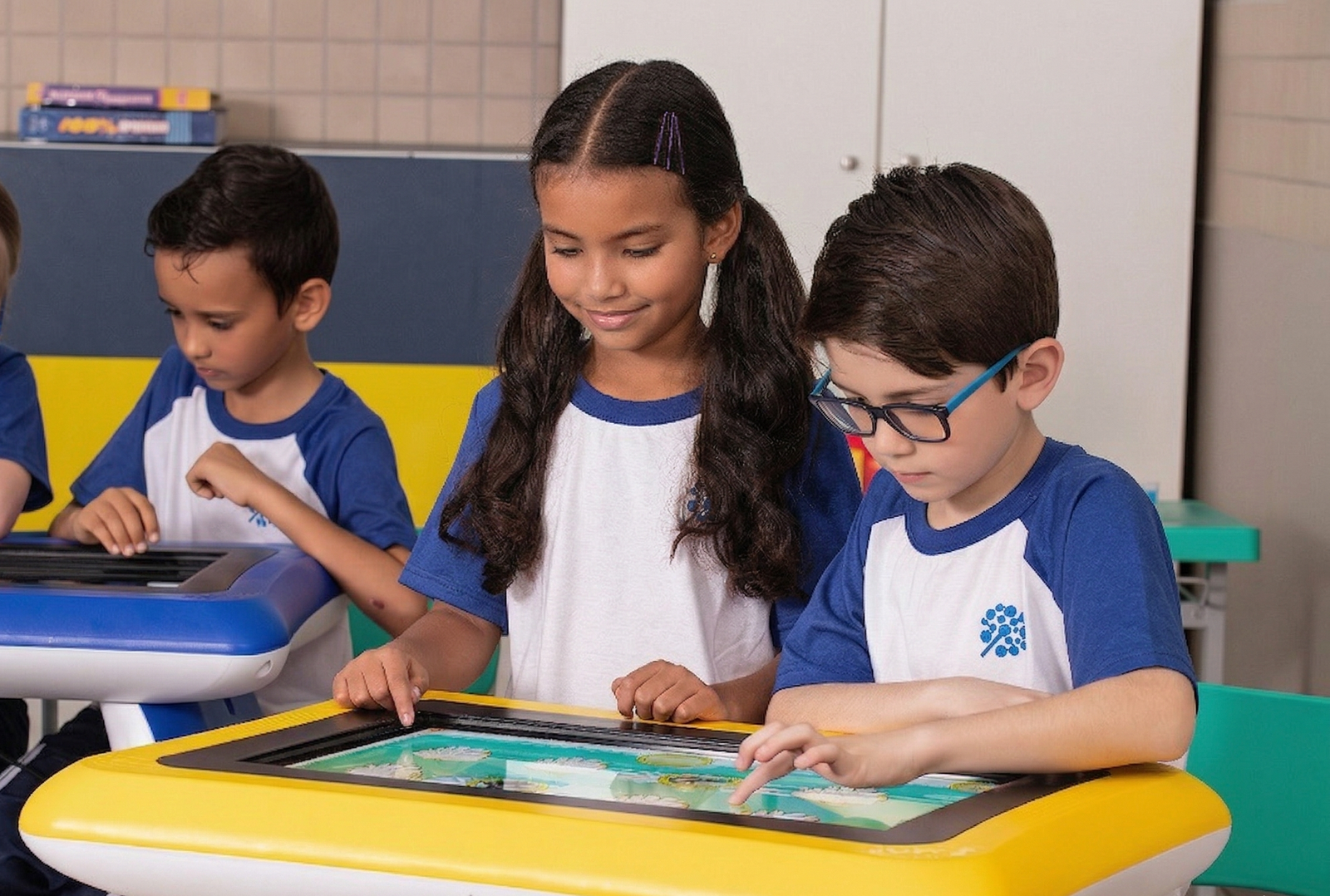
Today we recognize World Autism Day. Created by the United Nations in 2007, April 2nd was established as a day to highlight the global need for improving the quality of life for those on the autism spectrum. It is a commitment to ensuring that neurodivergent individuals can lead full, meaningful lives as an integral part of our society. It’s about ensuring that learners with autism have the tools and environments they need to thrive in a world that isn’t always designed with their sensory or social needs in mind.
While the day’s origins are rooted in awareness, in recent years the focus has increasingly emphasized a call for true acceptance and inclusion. In other words, World Autism Day is not just about recognizing the challenges that neurodivergent individuals face, but also recognizing their unique strengths. For families and educators, this means moving beyond a diagnosis and focusing on the environment a child needs to truly thrive. At Playmove, we see this not just as an annual observation, but as a daily reminder of why we do what we do.
Understanding the Neurodivergent Experience
Learners on the autism spectrum often navigate the world differently. For many, environmental factors like ambient sound, lighting, or even the tactile “feel” of their surroundings can become overwhelming or distracting. These sensory processing differences, combined with the “unwritten rules” of social communication, can make everyday life incredibly taxing to navigate. Furthermore, there is often a profound need for predictability, many students with autism have the most success when they know exactly what to expect from their environment, allowing them to focus their energy on learning rather than navigating uncertainty.
Acceptance means looking at these differences and asking: “How can we provide the best support for these students based on their individual needs?”
Technology as a Bridge
For many autistic learners, digital tools have become a game-changer in both the classroom and at home. These tools are uniquely suited to the way many neurodivergent brains process information because they provide a level of consistency that is often difficult to achieve in our everyday lives. Digital spaces offer static, logical rules that lower the ‘social load’ of learning. These interfaces are inherently visual-first, providing the concrete, high-contrast prompts that many students rely on to anchor their attention. They are also infinitely patient, allowing students to repeat tasks as needed to find their flow.
However, standard tablets can sometimes lead to isolation. That’s where the “table” format changes the narrative.
The Playmove Approach: Social by Design
While traditional technology is incredibly supportive, it does come with a common drawback. Because most tablets and computers are designed for a single user, they can inadvertently lead to isolation. While this “solo” approach successfully lowers the social load of learning, it often limits the opportunities for students to practice the organic social relating that happens during shared play.
This is where the PlayTable format changes the narrative. It offers a rare and necessary flexibility: it can be used individually for students who may be experiencing sensory or social fatigue and need a quiet, focused space. However, it is fundamentally designed to be a “social hub.” By creating a physical space for in-person interaction, it bridges the gap between digital focus and meaningful human connection in a way traditional, one-on-one technology simply can’t.
A Design Built for Diverse Needs
When we prioritize a student’s comfort and sensory preferences, we create a space where learning happens naturally. The Playmove Table was designed to do exactly that, supporting neurodivergent learners in several key ways:
- Socialization Without Pressure: The Playmove Table supports up to four players at once. This allows students to engage in parallel or cooperative play at their own comfort level. They can work side-by-side on a shared goal or practicing turn-taking and teamwork in a structured environment that significantly reduces social anxiety. Alternatively, they can simply use it for independent play if their social battery is drained for the day
- Harnessing Special Interests: One of the most effective ways to engage a learner with autism is through their unique passions. Our platform allows for a truly personalized touch: educators and families can upload custom images into games like puzzles. Whether a student is captivated by trains, deep space, or a specific animal, incorporating their favorite subjects into the game acts as a powerful motivator for persistence and focus.
- Tactile and Physical Engagement: Many students on the spectrum are uniquely drawn to the visual and tactile physicality of the Playmove Table. Our pressure-sensitive screen is designed to be inclusive; it recognizes more than just a finger, responding to adapted pointers or even paintbrushes. This flexibility, paired with immediate “cause-and-effect” audio and visual cues, provides a predictable environment that helps students build motor coordination and confidence simultaneously.
Building an Inclusive Future
As we recognize World Autism Day, we are reminded that the best technology doesn’t just provide answers; it provides access. By creating environments that respect sensory needs, celebrate individual interests, and offer a safe space for social connection, we move one step closer to true inclusions and acceptance. At Playmove, we are proud to support the educators, families, and learners who are proving every day that when a student is met exactly where they are, there is no limit to what they can achieve.